
Table of Contents
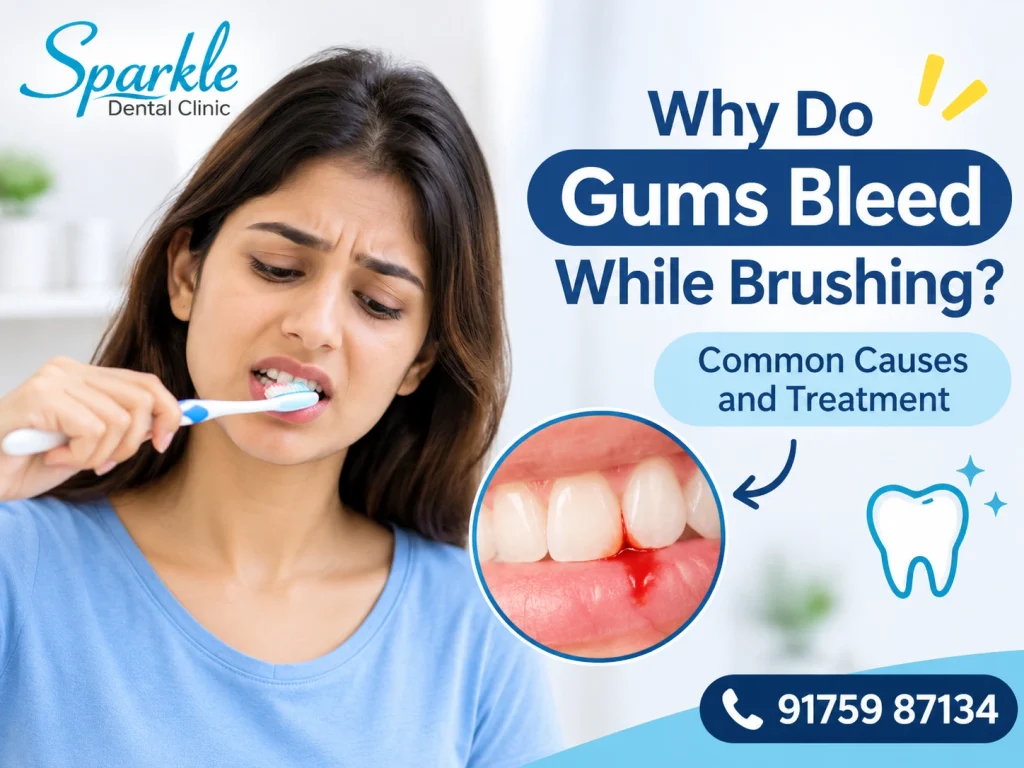
Bleeding gums while brushing are commonly caused by plaque buildup along the gumline, which can lead to gingivitis, an early stage of gum disease. Other possible causes include brushing too hard, using a hard-bristled toothbrush, hormonal changes, and certain medications. Occasional bleeding may occur due to minor irritation, but repeated bleeding should not be ignored. Gentle brushing, daily cleaning between the teeth, and professional dental care when needed can help manage the underlying cause.
Is It Normal for bleeding gums while brushing
Healthy gums generally should not bleed during normal brushing or flossing.
You may occasionally notice a small amount of blood after brushing aggressively or starting a new flossing routine. However, frequent bleeding can indicate gum inflammation that requires attention.
Some early warning signs include:
- Red, swollen, or tender gums
- Bleeding during brushing or flossing
- Persistent bad breath
- Discomfort around the gumline
- Gums gradually pulling away from the teeth
These symptoms may indicate gingivitis or more advanced gum disease.
6 Common Causes of Bleeding Gums While Brushing
1. Plaque and Tartar Buildup
Plaque is a sticky film of bacteria that continuously forms on teeth.
When plaque is not removed through regular brushing and interdental cleaning, it accumulates near the gumline and may cause irritation.
Over time, plaque can harden into tartar, which cannot be removed using a regular toothbrush.
Professional dental cleaning may be necessary to remove these deposits.
2. Gingivitis (Early Gum Disease)
Gingivitis is one of the most common reasons for bleeding gums.
It develops when plaque irritates the gum tissue, causing inflammation, redness, swelling, and bleeding during brushing.
The encouraging part is that plaque-related gingivitis can often be reversed through improved oral hygiene and professional cleaning when required.
However, untreated gingivitis may progress to more serious periodontal problems.
3. Brushing Too Hard
Many people believe brushing harder removes more plaque, but excessive pressure can irritate the gums and damage surrounding tissues.
Hard-bristled toothbrushes and aggressive brushing techniques may contribute to gum injury.
Using a soft-bristled toothbrush with gentle, controlled movements is generally recommended.
4. Periodontitis (Advanced Gum Disease)
Periodontitis is a more advanced form of gum disease that affects the tissues and bone supporting the teeth.
Apart from bleeding gums, symptoms may include:
- Persistent bad breath
- Gum recession
- Loose teeth
- Changes in how teeth fit together
Unlike early gingivitis, damage caused by periodontitis may not be reversible. However, appropriate treatment can help control the condition.
At Sparkle The Dental Clinic, we offer gum disease treatment options based on each patient’s oral health needs, helping manage gum inflammation, bleeding, and other gum-related concerns through appropriate dental care.
5. Hormonal Changes During Pregnancy
Hormonal changes during pregnancy can increase gum sensitivity and the inflammatory response to plaque.
Some pregnant women develop pregnancy-related gingivitis, which may cause swollen or bleeding gums.
Maintaining oral hygiene and attending dental examinations during pregnancy can help identify and manage these concerns.
6. Certain Medications and Health Conditions
Some medicines, particularly blood thinners, can make gum bleeding more noticeable.
Diabetes, nutritional deficiencies, and certain medical conditions may also contribute to gum problems.
If bleeding is frequent or unexplained, inform your dentist about your medical history and medications. Never stop prescribed medicines without consulting your treating doctor.
How to Stop bleeding gums while brushing at Home
If your gums bleed during brushing, the following steps can help support gum health.
Use a soft-bristled toothbrush: Brush gently along the gumline instead of scrubbing forcefully.
Brush twice daily: Clean your teeth for approximately two minutes using fluoride toothpaste.
Clean between your teeth: Use dental floss or interdental brushes appropriate for your teeth and gums.
Do not stop brushing: Avoiding affected areas allows more plaque to accumulate and may worsen inflammation. Continue cleaning gently.
Avoid tobacco products: Smoking and tobacco use increase the risk of gum disease and can interfere with healing.
Maintain regular dental check-ups: Professional examinations help identify gum problems that may not be visible at home.
These measures support oral hygiene but do not replace treatment for established gum disease.
What Dental Treatments Are Available for Bleeding Gums?
Treatment depends on the cause and severity of the condition.
| Treatment | When It May Be Recommended |
|---|---|
| Professional scaling | To remove plaque and tartar deposits |
| Root planing | For selected cases of gum disease affecting deeper areas |
| Oral hygiene guidance | To improve brushing and interdental cleaning |
| Periodontal treatment | For more advanced gum disease |
| Medical evaluation | When bleeding may be related to medication or another health condition |
A dentist may examine the gums, measure periodontal pockets, and recommend dental X-rays if needed.
The treatment approach depends on the severity of gum inflammation and the patient’s overall oral health. At Sparkle The Dental Clinic Kalyani Nagar, , we provide preventive dental care, professional teeth cleaning, and appropriate treatment for gum-related concerns based on individual patient needs.
When Should You Visit a Dentist for Bleeding Gums?
Arrange a dental consultation if:
- Your gums bleed repeatedly during brushing.
- Bleeding continues despite gentle brushing and proper cleaning.
- Your gums remain swollen, red, or painful.
- You experience persistent bad breath.
- Your gums are receding or your teeth feel loose.
Seek urgent dental or medical assessment for severe swelling, fever with dental infection symptoms, or heavy bleeding that does not stop.
Early assessment can help identify whether the problem involves simple gum inflammation or a more advanced condition.
Timely dental care can help identify gum problems before they worsen. At Sparkle The Dental Clinic, Dr. Manoj Nair and Dr. Shilpa Nair focus on individual dental needs. Learn more about our approach to dental care and oral health services.
Frequently Asked Questions
1. Why do my gums bleed every time I brush?
Repeated bleeding is commonly associated with plaque-related gum inflammation or gingivitis. Brushing technique, medications, and other conditions may also contribute. A dental examination can help determine the cause.
2. Can bleeding gums heal on their own?
Minor irritation may settle, but plaque-related gingivitis generally requires improved oral hygiene and sometimes professional cleaning. Persistent bleeding should be examined.
3. Should I stop brushing if my gums bleed?
No. Continue brushing gently with a soft toothbrush. Stopping brushing may allow plaque to accumulate and worsen inflammation.
4. Does scaling help with bleeding gums?
Professional scaling removes plaque and tartar that contribute to gum inflammation. It can help reduce bleeding when these deposits are the underlying cause.
5. Can vitamin deficiency cause bleeding gums?
Certain nutritional deficiencies, particularly vitamin C deficiency, can contribute to gum bleeding. However, plaque-related gum disease is a much more common cause.
Conclusion
Bleeding gums while brushing should not become a routine part of oral care. Although minor irritation can sometimes cause bleeding, repeated episodes may indicate gingivitis, plaque buildup, or another dental concern.
Gentle brushing, daily interdental cleaning, and timely dental examinations can help maintain healthier gums and identify problems early.
If you are experiencing recurring gum bleeding or swelling, you can contact our Clinic to enquire about a dental consultation and appropriate evaluation.

Dr. Manoj Nair (Endodontist & Implantologist)

Dr. Shilpa Nair (Inman Certified Dental Surgeon)
Dr. Shilpa Nair completed her graduation from Nair Hospital Dental College, Mumbai in 1997. She gained clinical experience under experienced private dental practitioners before establishing Sparkle Dental Clinic in Kalyani Nagar.
Her clinical approach places importance on hygiene, patient care and keeping up with developments in dentistry. She is also certified in Inman Aligner from the UK, supporting the clinic’s orthodontic and cosmetic treatment offerings.
Qualifications
- BDS, Nair Hospital Dental College, Mumbai
- Inman Certified Dental Surgeon
- Inman Aligner certification from the UK