
Retainers Treatment in Kalyani Nagar
What Are Dental Retainers?
Retainers treatment in Kalyani Nagar holds teeth in their corrected position after braces or clear aligner treatment, preventing them from drifting back toward their original alignment. Dr. Manoj Nair and Dr. Shilpa Nair fit removable and fixed retainers at Sparkle The Dental Clinic, Kalyani Nagar.
Teeth are held in place by the surrounding bone, gum and ligament, which take time to fully stabilise around a tooth’s new position after it has moved. A retainer holds that position steady while this stabilisation happens. It continues protecting against the gradual, lifelong drift that affects everyone’s teeth to some degree, corrected or not.
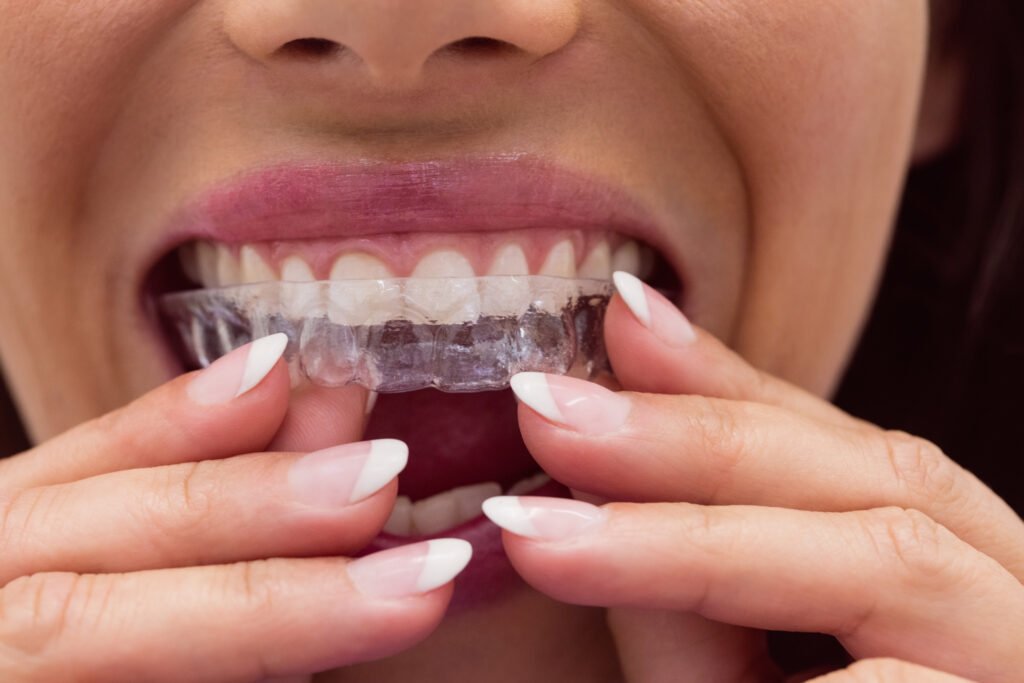
Why Retainers Are Necessary
The bone and ligament around a moved tooth need time to reorganise around its new position after braces or aligner treatment
Teeth naturally drift over a lifetime, even in mouths that never had orthodontic treatment, which is why retention is ongoing rather than a short, fixed period
Skipping retainer wear is one of the most common reasons corrected teeth shift back toward their original position, undoing months or years of treatment
The earliest weeks after braces or aligners are removed are the highest-risk period for relapse, which is why wear instructions are strictest immediately after treatment
Types of Retainers
| Removable Retainer | Fixed Retainer |
|---|---|
| A clear plastic tray or wire-and-acrylic (Hawley) appliance, taken in and out | A thin wire bonded behind the front teeth, not removed daily |
| Worn full-time initially, then reduced to nights only | Stays in place continuously without patient effort |
| Easy to clean separately from the teeth | Requires extra care with flossing, using a threader or interdental brush |
| Can be lost or forgotten, which is a common failure point | Cannot be lost, though it can occasionally debond and needs re-fixing |
| Straightforward to replace if damaged | Repair or replacement needs a clinic visit to re-bond the wire |
Many patients use both together: a fixed retainer for constant, low-effort holding on the front teeth and a removable one for additional support, particularly overnight.
Who Needs a Retainer
Every patient who has completed braces treatment, to hold the corrected position while the bone and gum stabilise
Every patient who has completed Inman Aligner or other clear aligner treatment, for the same reason
Patients who have had teeth previously straightened years ago and are noticing early signs of relapse
Patients wanting to protect a result they have already invested time and cost into achieving
The Retainer Fitting Process at Sparkle The Dental Clinic
Impression or scan
Taken once braces or aligner treatment is complete, to fabricate a retainer matched to the corrected position
Fitting
The retainer is checked for comfortable fit and, for a fixed retainer, bonded behind the front teeth
Wear instructions
Specific guidance on hours per day and how this reduces over time is given based on the individual case
Follow-up check
A short visit soon after fitting confirms the retainer is holding as expected
Periodic review
Retainers are checked at routine visits to catch wear, damage or fit changes early
How to Wear and Care for a Retainer
Follow the initial full-time wear schedule closely, since this is when relapse risk is highest
Clean a removable retainer daily, rinsing after removal and brushing gently with a soft brush, avoiding hot water, which can warp plastic
Floss around a fixed retainer using a threader or interdental brush, since regular floss cannot pass under the bonded wire
Store a removable retainer in its case when not worn, rather than in a pocket, napkin or tissue, which are common ways retainers get lost or damaged
Bring the retainer to dental check-ups, so fit and condition can be reviewed alongside the teeth
How Long Do You Need to Wear a Retainer?
Indefinitely, in practical terms. Wear typically starts full-time, reduces to nights only after some months and continues at night on a long-term basis, since teeth can drift at any point in life, not only in the first year after treatment. This is not a sign that the original treatment failed; it reflects how teeth behave over a lifetime, corrected or not. Patients who stop wearing a retainer entirely after a year or two often see some degree of relapse eventually, even if it takes years to become noticeable.
Common Retainer Myths
“Once my teeth feel stable, I can stop wearing the retainer.” Feeling stable is not the same as being permanently fixed; the drift that causes relapse is often too gradual to notice until it has already progressed.
“A retainer that still fits means it’s still working.” A retainer can fit while teeth have already started drifting slightly around it. Fit alone is not a complete check; a clinic review is more reliable.
“Fixed retainers never need attention.” They can debond without the patient noticing right away, particularly a single point coming loose at one end while the rest still feels attached.
“Skipping a few nights occasionally won’t matter.” Occasional short gaps are lower risk than stopping entirely, but consistency is what actually protects the result, especially in the months right after treatment.
What Happens If You Stop Wearing Your Retainer
Teeth can begin shifting back toward their original position within weeks of stopping retainer wear entirely, though the pace and extent varies by individual. Early relapse is sometimes correctable by resuming wear promptly or, for more noticeable shifts, with a short course of aligner treatment. Significant relapse left unaddressed for years may need a fuller repeat of the original treatment. Catching a change early, rather than waiting to see how far it goes, keeps the options simpler.
Replacing a Lost or Damaged Retainer
A removable retainer that is lost, cracked or no longer fits well should be replaced rather than left out, since even a short gap in wear can allow noticeable drift, particularly soon after treatment. A new impression or scan is taken to fabricate a replacement matched to the current tooth position, which may differ slightly from the original if any drift has already occurred. A fixed retainer that debonds should be re-checked promptly rather than assumed to still be doing its job, since a partially detached wire may no longer be holding teeth as intended. Contact the clinic as soon as possible rather than waiting, since gaps in wear are when relapse is most likely to begin. A temporary measure at home is not a substitute for a proper replacement, since an ill-fitting or improvised retainer can do less than nothing to hold the position.
Retainers After Braces vs After Clear Aligner Treatment
The retention principle is the same regardless of which treatment corrected the teeth: hold the new position while bone and gum stabilise, then continue long-term wear to protect against lifelong drift. Braces (detailed on the Braces Treatment page) and the Inman Aligner (detailed on the Clear Aligners Treatment page) both end with a retainer fitting as the final step. Neither treatment is considered complete without it.
Why Choose Sparkle The Dental Clinic for Retainers in Kalyani Nagar?
Retainer fitting is built into every braces and Inman Aligner case at Sparkle The Dental Clinic as the final treatment stage, not an optional add-on discussed only if the patient asks. Dr. Manoj Nair and Dr. Shilpa Nair review retainer fit at routine check-ups, so a loosening fit or early sign of relapse is caught during a visit already on the calendar rather than only when a problem becomes obvious. On Practo, 97 percent of 150 reviewing patients recommend Dr. Manoj Nair’s care.
FAQs
Frequently Asked Questions
Effectively, yes, for the ongoing night-time phase. Teeth drift throughout life for everyone, treated or not. Long-term retainer wear is what protects a corrected position from that drift.
In many cases, yes, though this depends on the individual case and is assessed during a check-up rather than assumed to be interchangeable for everyone.
A well-fitting retainer should feel snug without pressure or pain. Looseness, difficulty seating it fully or a change in how your bite feels are signs worth having checked.
Contact the clinic as soon as possible rather than waiting, since gaps in wear are when relapse is most likely to begin.
Cost depends on the type of retainer and whether it is a first fitting or a replacement. This is discussed during the consultation.
Book an Appointment With Dr. Manoj Nair – Dentist in Kalyani Nagar
Looking for personalized dental care in Kalyani Nagar? Dr. Manoj Nair at Sparkle Dental Clinic offers dental care backed by postgraduate education in Conservative Dentistry and Endodontics, clinical experience, academic teaching experience and ongoing professional development.
Whether you are seeking an evaluation for a dental concern, endodontic care, implant-related consultation or preventive dental guidance, a consultation can help determine the appropriate treatment approach for your individual needs.