
Table of Contents
Does your toothache become worse at night? Do you experience sharp pain while chewing or sensitivity that continues even after drinking cold water? These symptoms may indicate a problem deeper inside your tooth rather than ordinary tooth sensitivity.
Many people ignore dental discomfort until it begins interfering with eating, sleeping or everyday activities. However, recognising the early signs of tooth infection may help prevent further complications.
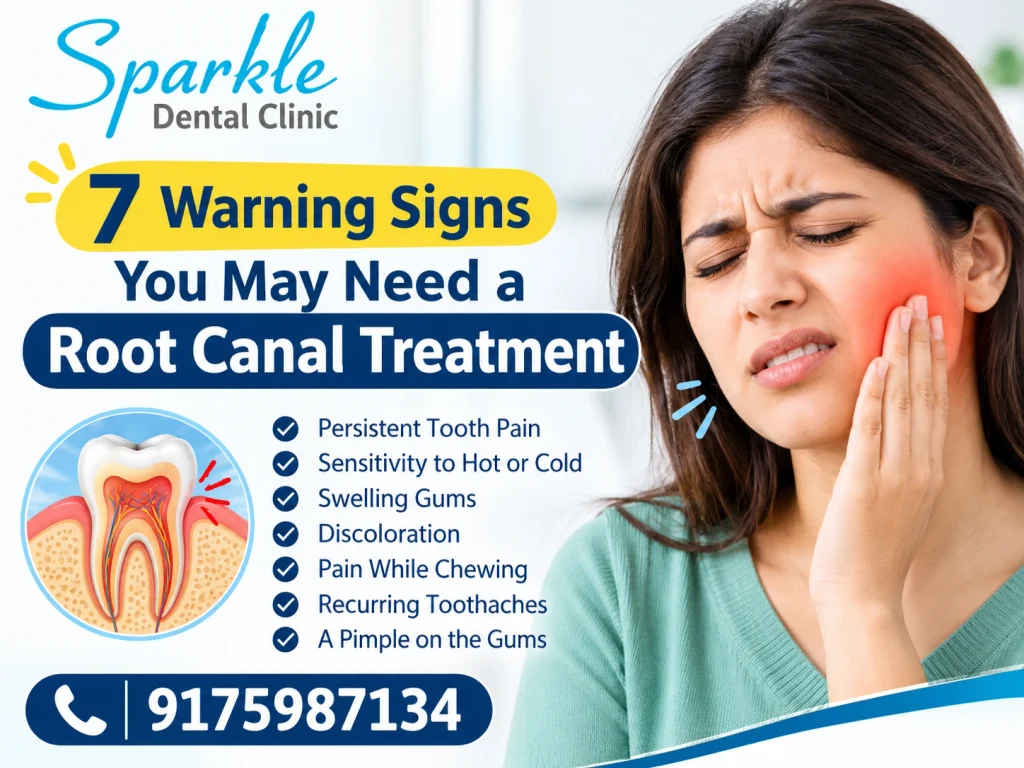
The seven warning signs you may need a root canal treatment include persistent toothache, prolonged sensitivity to hot or cold, pain while chewing, swollen gums, tooth discolouration, a pimple-like bump on the gums and recurring pain in the same tooth. These symptoms may indicate inflammation or infection of the dental pulp. A dental examination is necessary to confirm whether root canal treatment is required.
What Is Root Canal Treatment and Why Is It Needed?
Root canal treatment, also known as RCT or endodontic treatment, is a dental procedure used to treat inflammation or infection inside a tooth.
The innermost part of a tooth contains soft tissue called dental pulp, which includes nerves and blood vessels. When deep decay, cracks or injuries damage this tissue, the tooth may require treatment.
Root canal treatment involves removing the damaged pulp, cleaning and disinfecting the root canals and sealing the tooth to help preserve its natural structure.
Visiting a Dental Clinic in Kalyani Nagar for early evaluation can help determine the cause of dental discomfort before the condition becomes more complicated.
What Are the 7 Warning Signs You May Need a Root Canal Treatment?
1. Persistent Toothache That Does Not Go Away
A toothache that continues for several hours or repeatedly returns may indicate inflammation or infection inside the tooth.
The pain may occur spontaneously, become worse at night or spread towards the jaw.
Painkillers may provide temporary relief, but they do not treat the underlying dental problem.
2. Prolonged Sensitivity to Hot or Cold Foods
Do you experience tooth sensitivity that continues even after you stop drinking hot tea or cold water?
Ordinary sensitivity often disappears shortly after the trigger is removed. However, discomfort lasting around 30 seconds or longer may indicate deeper pulp inflammation.
Persistent sensitivity should be evaluated by a dentist.
3. Pain While Chewing or Biting Down
Pain when eating, chewing or applying pressure to a particular tooth may indicate inflammation around the tooth’s root.
Deep cavities, cracked teeth and pulp infections can contribute to this discomfort.
Avoid chewing hard foods on the affected side until the cause has been identified.
4. Swollen or Tender Gums Around a Tooth
Swelling near a particular tooth may develop when infection spreads beyond the dental pulp.
You may notice redness, tenderness or discomfort while brushing around the affected area.
Patients experiencing these symptoms may require a dental examination to determine whether Root Canal Treatment in Kalyani Nagar or another dental procedure is appropriate.
5. Sudden Tooth Discolouration
Has one of your teeth gradually become darker than the surrounding teeth?
A grey, brown or unusually dark tooth may indicate damage to the dental pulp, particularly following an injury.
Not every discoloured tooth requires root canal treatment, but unexplained changes should be examined.
6. A Pimple-Like Bump on the Gums
A small bump near a tooth may indicate a draining dental abscess.
It may be accompanied by pus, an unpleasant taste or occasional discomfort. Even if the swelling disappears temporarily, the underlying infection may remain.
Avoid squeezing the bump or attempting to treat it at home.
7. Recurring Pain in the Same Tooth
A tooth that repeatedly becomes painful, especially after previous dental treatment or a deep filling, may require further investigation.
Recurring discomfort can result from several conditions, including pulp inflammation, decay or cracks.
A consultation with Dr. Manoj Nair and Dr. Shilpa Nair Dentist in Kalyani Nagar, can help determine the underlying cause and appropriate treatment options.
How Do You Know If You Need a Filling or a Root Canal?
The treatment depends on the depth of tooth decay and whether the dental pulp has been affected.
| Dental condition | Possible treatment |
|---|---|
| Small or moderate cavity | Dental filling |
| Brief tooth sensitivity | Sensitivity management or restorative treatment |
| Deep decay with irreversible pulp inflammation | Root canal treatment |
| Infected dental pulp | Root canal treatment if the tooth can be restored |
| Severely damaged, non-restorable tooth | Tooth extraction may be considered |
A dental examination, pulp sensitivity tests and an X-ray when required can help determine the appropriate treatment.
Can an Infected Tooth Heal Without a Root Canal?
An infected or irreversibly damaged dental pulp generally cannot heal on its own.
Although tooth pain may temporarily disappear, this does not necessarily mean the infection has resolved. In some cases, discomfort decreases when the pulp loses its vitality.
Untreated dental infections may cause abscess formation, swelling, damage to supporting bone and possible tooth loss.
Seek emergency medical care if you experience difficulty breathing or swallowing, extensive facial swelling or swelling around the eye.
What Happens During Root Canal Treatment?
Root canal treatment generally involves the following steps:
- Dental examination and diagnostic assessment.
- Administration of local anaesthesia.
- Removal of the infected or damaged dental pulp.
- Cleaning and disinfection of the root canals.
- Filling and sealing the canals.
- Restoration of the treated tooth.
Depending on the remaining tooth structure, a filling or Dental Crown may be recommended to protect the tooth and restore chewing function.
What Should You Do If You Notice These Warning Signs?
Until you receive professional dental care:
- Avoid chewing hard foods on the affected tooth.
- Avoid extremely hot or cold beverages if they trigger discomfort.
- Maintain gentle brushing and regular oral hygiene.
- Do not place aspirin directly on the tooth or gums.
- Avoid taking antibiotics without a prescription.
- Arrange a dental evaluation rather than relying on temporary pain relief.
Early assessment can help determine whether the natural tooth can be preserved.
Frequently Asked Questions
Is root canal treatment painful?
Local anaesthesia is used to minimise discomfort during treatment. Some temporary tenderness or sensitivity may occur afterwards.
Can I need a root canal without tooth pain?
Yes. Some teeth with damaged or infected pulp may cause little or no pain. Dental examinations and diagnostic tests can help identify such conditions.
How many visits are needed for root canal treatment?
Straightforward cases may require one or two visits. More complex cases may require additional appointments.
Is a dental crown necessary after root canal treatment?
Not every treated tooth requires a crown. The recommendation depends on the tooth’s location, remaining structure and chewing load.
What happens if I delay root canal treatment?
Delaying necessary treatment may allow infection to progress, increasing the risk of swelling, abscess formation and tooth loss.
Conclusion
Recognising the warning signs of tooth infection can help you seek timely dental care. Persistent toothache, prolonged sensitivity, swollen gums and pain while chewing should not be ignored.
At Sparkle The Dental Clinic & Implant Center, Dr. Manoj Nair and Dr. Shilpa Nair provide dental evaluation and treatment planning based on individual oral health needs.
Patients from Kalyani Nagar, Viman Nagar, Koregaon Park, Yerawada and nearby areas can contact Sparkle The Dental Clinic for information about dental examinations and root canal consultations.

Dr. Manoj Nair (Endodontist & Implantologist)

Dr. Shilpa Nair (Inman Certified Dental Surgeon)
Dr. Shilpa Nair completed her graduation from Nair Hospital Dental College, Mumbai in 1997. She gained clinical experience under experienced private dental practitioners before establishing Sparkle Dental Clinic in Kalyani Nagar.
Her clinical approach places importance on hygiene, patient care and keeping up with developments in dentistry. She is also certified in Inman Aligner from the UK, supporting the clinic’s orthodontic and cosmetic treatment offerings.
Qualifications
- BDS, Nair Hospital Dental College, Mumbai
- Inman Certified Dental Surgeon
- Inman Aligner certification from the UK