
Children's Dental Check-up in Kalyani Nagar
What Is a Children's Dental Check-up?
A children’s dental check-up in Kalyani Nagar reviews a child’s teeth, gums and bite, applies preventive care where needed and catches early problems before they cause pain. Dr. Manoj Nair and Dr. Shilpa Nair provide routine dental check-ups for children at Sparkle The Dental Clinic, Kalyani Nagar.
A check-up is the routine, preventive visit that most children need every six months, distinct from a visit for a specific problem like pain or a chipped tooth. Confusing the two sometimes leads parents to delay a routine visit while waiting for “something to actually be wrong,” when the entire point of a check-up is to catch problems before they reach that stage. General guidance on pediatric dental care, including first-visit timing and common concerns, is covered on the Pediatric Dentistry Treatment focuses specifically on what the routine check-up itself involves and how it changes as a child grows, from a first look at an infant’s emerging teeth through to a near-adult visit in the teenage years.
What Is a Children's Dental Check-up?
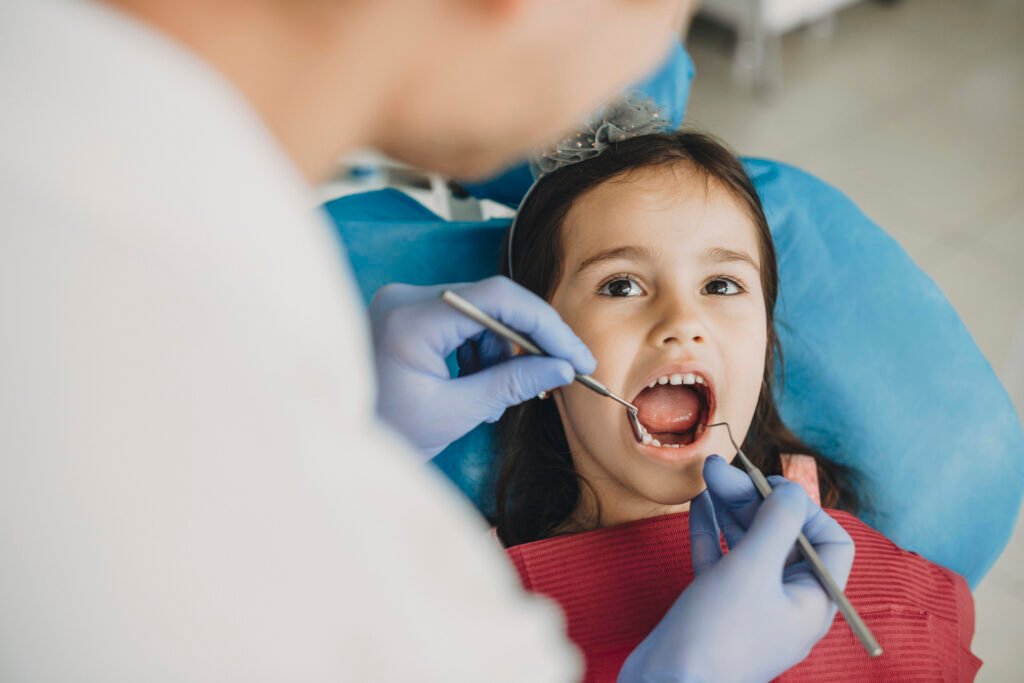
A children’s dental check-up in Kalyani Nagar reviews a child’s teeth, gums and bite, applies preventive care where needed and catches early problems before they cause pain. Dr. Manoj Nair and Dr. Shilpa Nair provide routine dental check-ups for children at Sparkle The Dental Clinic, Kalyani Nagar.
A check-up is the routine, preventive visit that most children need every six months, distinct from a visit for a specific problem like pain or a chipped tooth. Confusing the two sometimes leads parents to delay a routine visit while waiting for “something to actually be wrong,” when the entire point of a check-up is to catch problems before they reach that stage. General guidance on pediatric dental care, including first-visit timing and common concerns, is covered on the Pediatric Dentistry Treatment focuses specifically on what the routine check-up itself involves and how it changes as a child grows, from a first look at an infant’s emerging teeth through to a near-adult visit in the teenage years.
Children's Dental Check-ups by Age
Infants and toddlers (first tooth to around age 3)
A brief, gentle look at the emerging teeth and gums, mainly to check development and guide parents on cleaning technique, with minimal instrumentation
Preschool and early school age (around 3 to 7)
A fuller examination including all erupted baby teeth, an assessment for early decay and often the introduction of fluoride or sealants
School age with mixed teeth (around 7 to 12)
Monitoring as permanent teeth come in alongside remaining baby teeth, watching for crowding or bite issues worth flagging early
Teenagers
A check-up closer to an adult visit in scope, including wisdom tooth development monitoring and any orthodontic considerations
The same underlying check-up principle applies throughout, but what is actually checked and how much a child is expected to cooperate shifts considerably across this range. A toddler’s five-minute look is not a shorter version of a teenager’s fuller exam; it is a different kind of visit suited to what is developmentally relevant and realistic at that age. Expecting toddler-level cooperation from a toddler, rather than adult-level stillness, is part of what keeps these early visits positive rather than a struggle.
Children's Dental Check-ups by Age
Shorter attention spans are planned for
With appointments kept efficient rather than expecting a young child to sit still through a long, slow-paced visit
Communication is adjusted to the child
Explaining what is happening in simple terms rather than the clinical language used with adult patients
Growth and development are part of the check
Not just current tooth condition, since a child’s mouth is actively changing in a way an adult’s is not
Parents are part of the conversation
Since home care guidance is often directed as much at the parent as the child, particularly for younger patients
X-ray judgment is more conservative
Weighing the value of the image against minimising exposure for a developing child more carefully than a routine adult X-ray decision
Preparing Your Child for a Dental Check-up
Talk about it plainly and briefly beforehand
Without over-explaining or building it up as something to be nervous about
Avoid using the visit as a threat
(behave or you’ll need a filling), which links the dentist to punishment rather than routine care
Bring a comfort item for younger children
If that helps them settle into a new environment
Keep your own tone matter-of-fact
Since children often pick up on a parent’s anxiety about dental visits more than anything said directly to them
Arrive a little early
So the visit does not start rushed if there is paperwork or a short wait
What Happens During a Children's Dental Check-up
Check-in and settling in
A few minutes for the child to get comfortable, particularly important for a first visit or a nervous child
Review of any changes
Questions about eating, brushing habits, any pain or concerns since the last visit
Visual examination
Teeth, gums, bite and soft tissue are checked
X-rays, only if needed
Not routine for every visit, particularly for very young children. Used when something specific needs closer assessment
Cleaning
Plaque and any tartar are removed, appropriate to the child’s age and cooperation
Preventive treatment, if indicated
Fluoride or sealants applied where they fit the child’s risk and age
Wrap-up with parents
Findings and any home care guidance are explained clearly before the visit ends
How Often Should Children Have a Dental Check-up?
Every six months is the standard interval for most children, matching the adult recommendation. A child with a higher cavity risk, ongoing orthodontic treatment or a specific condition being monitored may be seen more often, similar to how adult recall intervals adjust for individual risk. This is confirmed at each visit rather than assumed to be fixed forever. A child moved to a shorter interval after a cavity is found can move back to a standard six-month schedule once risk settles, rather than staying on the closer interval indefinitely by default.
What Happens If a Problem Is Found?
Most check-ups do not turn up anything needing immediate treatment. When something is found, such as an early cavity, it is explained to parents along with the recommended next step, which is often a separate, dedicated appointment rather than treatment mid-check-up. Scheduling the treatment separately also means a child is not caught off guard by an unplanned procedure during what they expected to be a routine visit. Cavity treatment is detailed on the Dental Fillings Treatment General pediatric concerns beyond the routine check-up are covered on the Pediatric Dentistry Treatment
Building a Lifelong Dental Check-up Habit
Consistency matters more than any single visit
Since the six-month rhythm is what actually catches problems early over years
A calm first few visits sets the tone
For years of future appointments
Involve older children in understanding why brushing and check-ups matter
Rather than only instructing them to cooperate, as this tends to build better long-term habits than compliance alone
Keep the same clinic where possible
So the check-up history and the child’s comfort with the environment both build over time rather than resetting with every provider change
Why Choose Sparkle for Your Child's Dental Check-up?
Check-ups at Sparkle The Dental Clinic are paced to the child’s age and comfort rather than run through on a fixed script regardless of who is in the chair. Dr. Manoj Nair and Dr. Shilpa Nair explain findings to parents clearly, including when nothing needs treatment, so a check-up visit ends with a clear picture rather than vague reassurance. On Practo, 97 percent of 150 reviewing patients recommend Dr. Manoj Nair’s care. Because the clinic treats the whole family, a child’s check-up history builds at the same practice over years rather than transferring between providers, so growth patterns and past findings are already known at each new visit.
FAQs
Frequently Asked Questions
Typically 15 to 30 minutes, depending on the child’s age, cooperation and whether any preventive treatment like fluoride is included. A first visit or an appointment for a particularly young or nervous child can run a little longer to allow for settling in.
No. X-rays are used when specifically needed to assess something the visual exam cannot confirm, not as a routine part of every visit, particularly for younger children, where minimising unnecessary exposure is weighed carefully.
This is common, especially at younger ages or on a first visit. The team works at the child’s pace rather than forcing the appointment. Most children settle with a patient approach over a visit or two. A difficult first visit is not unusual. It is not a sign that future visits will go the same way.
Yes. For younger children this is generally encouraged, since a familiar presence helps most children stay calmer.
The consultation fee covers the check-up itself; any additional preventive treatment like fluoride or sealants is discussed separately if indicated, so there are no surprise additions once the visit is already underway.
Book an Appointment With Dr. Manoj Nair – Dentist in Kalyani Nagar
Looking for personalized dental care in Kalyani Nagar? Dr. Manoj Nair at Sparkle Dental Clinic offers dental care backed by postgraduate education in Conservative Dentistry and Endodontics, clinical experience, academic teaching experience and ongoing professional development.
Whether you are seeking an evaluation for a dental concern, endodontic care, implant-related consultation or preventive dental guidance, a consultation can help determine the appropriate treatment approach for your individual needs.