
Braces Treatment in Kalyani Nagar at Sparkle the Dental Clinic
What Are Dental Braces?
Braces treatment in Kalyani Nagar helps correct crooked teeth, gaps, overcrowding, and bite alignment issues. Treatment options include metal braces, ceramic braces, self-ligating braces, and lingual braces. Clear aligners may also be suitable for certain cases. A dental examination helps determine the right orthodontic treatment based on your needs.
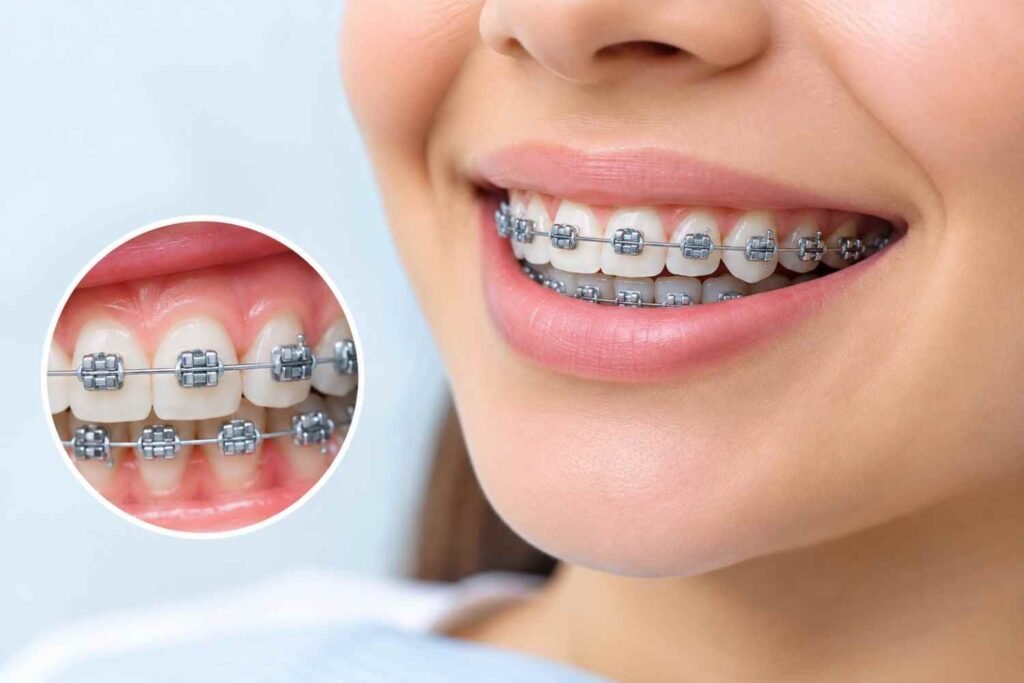
Types of Braces Treatment in Kalyani Nagar at Sparkle The Dental Clinic
- Metal Braces – Fixed braces used to correct crooked, crowded, and misaligned teeth.
- Ceramic Braces – Tooth-coloured braces designed to be less noticeable.
- Lingual Braces – Braces fitted behind the teeth.
- Clear Aligners – Transparent, removable trays used to straighten teeth in suitable cases.
What Problems Can Braces Treatment Corrected ?
Braces treatment in kalyani nagar at Sparkle The Dental Clinic under the care of Dr. Manoj Nair and Dr. Shilpa Nair, can help address various teeth alignment and bite-related concerns. The recommended treatment depends on each patient’s dental condition and orthodontic assessment.
- Crooked Teeth: Helps align teeth that are twisted or unevenly positioned.
- Crowded Teeth: Addresses overlapping teeth caused by limited space.
- Gaps Between Teeth: Helps close spaces between teeth where appropriate.
- Overbite: Corrects certain cases of excessive overlap of the upper front teeth.
- Underbite: Helps manage cases where the lower teeth extend ahead of the upper teeth.
- Crossbite: Helps correct situations where some upper teeth bite inside the lower teeth.
- Open Bite: May help correct cases where upper and lower teeth do not meet when the mouth is closed.
- Bite Alignment Problems: Helps improve how the upper and lower teeth meet during biting and chewing.
How Braces Treatment In Kalyani Nagar Work
Brackets
Are bonded to each tooth and connected by a wire
The wire's tension
Does the work of moving teeth over time
Each adjustment visit
Tightens or changes the wire to keep movement progressing toward the planned outcome
Unlike the Inman Aligner
Which moves only the front teeth for mild to moderate crowding, braces can address the back teeth, the bite as a whole and more significant misalignment
These symptoms should be evaluated by a dentist rather than self-diagnosing the required treatment, as different dental problems can have similar signs. For example, tooth pain may be caused by a cavity, an infection requiring root canal treatment, or a cracked tooth that may need a crown. A dental examination helps identify the cause and determine the appropriate treatment.
Braces vs Inman Aligner
Inman Aligner
Removable, front teeth only, mild to moderate crowding or protrusion, typically weeks to complete
Braces
Fixed, can move any tooth, corrects back-teeth alignment and the bite itself, typically months to a couple of years to complete
Front-teeth crowding with a normal bite
May be a candidate for either option
Back-teeth crowding, a significant bite issue or complex misalignment
Needs braces
Age is not the deciding factor
The extent and location of the misalignment is
Difference Between Metal Braces & Ceramic Braces
| Metal Braces | Ceramic Braces |
|---|---|
| Most visible option | Tooth-coloured brackets, less visible |
| Most durable, lowest cost | Slightly more fragile than metal |
| Fastest general treatment time for complex cases | Comparable treatment time to metal in most cases |
| Standard choice for extensive correction | Preferred by patients wanting a less visible option during treatment |
Same underlying principle
Brackets and a wire applying steady pressure to move teeth over time
The choice between them
Is largely about visibility and durability preference, not one being more effective than the other for most cases
Cost is typically the other deciding factor
The cost of braces treatment in Kalyani Nagar typically ranges from ₹25,000 to ₹2,00,000+, depending on the type of braces, teeth alignment needs, and treatment duration.
Benefits of Braces Treatment in Kalyani Nagar
- Straighter Teeth: Helps align crooked and unevenly positioned teeth.
- Improved Bite Alignment: Helps correct certain overbite, underbite, and crossbite problems.
- Better Oral Hygiene: Properly aligned teeth may be easier to brush and clean.
- Reduced Food Trapping: Correcting crowded teeth may make cleaning between teeth easier.
- Improved Chewing Function: Helps improve how the upper and lower teeth meet.
- Enhanced Smile Appearance: Helps create a more aligned and balanced smile.
- Personalised Treatment Planning: A dentist in Kalyani Nagar can assess your teeth and recommend suitable orthodontic options.
Choosing an experience dentist in Kalyani Nagar for an orthodontic assessment can help you understand your treatment options, expected duration, and aftercare requirements. Regular follow-ups and wearing retainers as advised help maintain the results after braces treatment.
Signs You May Need Braces
Crowded or overlapping teeth
Extending beyond the front teeth
Noticeable gaps between multiple teeth
Not limited to the front
A bite that does not meet evenly
Such as an overbite, underbite or crossbite
Difficulty biting or chewing
Linked to how the teeth meet
Jaw or bite discomfort
That has developed alongside noticeable misalignment
A previous Inman Aligner assessment
That found the case outside the aligner’s scope
The Braces Treatment Process at Sparkle The Dental Clinic
Initial Consultation and Imaging
An examination, X-rays and a discussion of whether braces or the Inman Aligner fits the case, confirmed before any appliance is chosen.
Treatment Planning
The type of braces, expected duration and a rough sequence of adjustment visits are laid out based on what the imaging shows.
Bonding Appointment
Brackets are bonded to each tooth in a single visit, typically taking around an hour to ninety minutes, followed by the archwire being threaded through and secured.
First Follow-Up Check
A short visit soon after bonding to confirm the braces are settling correctly and to address any immediate discomfort.
Regular Adjustment Visits
The wire is tightened or changed periodically, typically every four to six weeks, with each visit generally taking twenty to thirty minutes.
Progress Review
Partway through treatment, imaging may be repeated to confirm movement is on track against the original plan.
Removal
Once correction is complete, brackets and wire are removed and the teeth are cleaned and polished.
Retainer Fitting
A retainer, removable or fixed, is fitted immediately after removal to hold the new position while the bone and gum stabilise.
What Happens After You Get Braces Treatment
Some soreness and tenderness
In the first few days after brackets are bonded is common, as the teeth start responding to the new pressure
Lips and cheeks may feel irritated
By the brackets initially, until they toughen up over the first couple of weeks
Orthodontic wax
Can be used on any spot that rubs uncomfortably in the meantime
Speech can sound slightly different
For the first few days, which typically resolves on its own as the tongue adjusts
How to Take Care of Your Teeth While Wearing Braces
Brush after every meal where possible
Since food traps more easily around brackets and wires
Floss with a threader or interdental brush
Since regular floss cannot pass under the wire
Avoid hard, sticky or chewy foods
That can bend a wire or dislodge a bracket
Wear a mouthguard during sports
To protect both the braces and the teeth underneath
Attend every adjustment visit
Since missed appointments extend overall treatment time rather than shortening it
Common Braces Myths
“Braces are only for children.”
Adults make up a substantial share of braces patients. Treatment works the same way at any age.
“Braces take teeth out first.”
Extraction is sometimes part of a treatment plan for severe crowding, but it is not a default step. Many cases proceed without it.
“Ceramic braces work faster than metal.”
Both work on the same mechanical principle and generally take a comparable amount of time; the choice is mostly about visibility, not speed.
“Once braces come off, the job is done.”
Skipping the retainer phase is one of the most common reasons corrected teeth shift back toward their original position.
How Long Does Braces Treatment Take?
Straightforward crowding or spacing cases
Often complete in around a year to eighteen months
More significant bite correction or complex crowding
Can take closer to two years
Patient cooperation matters
Attending every adjustment visit and following dietary guidance keeps treatment on the estimated timeline
Missed appointments or repeated bracket damage
Tend to extend the timeline rather than shorten it
The initial treatment plan
Gives a realistic estimate based on the imaging and examination, rather than a fixed timeline applied to every case
Retainers After Braces
Teeth naturally drift over time
Which is why a retainer is worn after braces are removed to hold the corrected position while the surrounding bone and gum stabilise
A removable retainer
Is typically worn full-time at first, then reduced to nights only
A fixed retainer
A thin wire bonded behind the front teeth, stays in place without daily removal
Some patients use both
A fixed retainer for constant, low-effort holding and a removable one for additional support at night
Skipping retainer wear
Is one of the most common reasons teeth shift back toward their original position after otherwise successful treatment
Why Choose Sparkle The Dental Clinic for Braces in Kalyani Nagar?
Every case is assessed with imaging and a bite examination
Before recommending treatment, rather than fitting braces as a default response to any crowding concern
This assessment step
Determines whether the case genuinely needs the full scope of braces or could be addressed with the Inman Aligner instead
On Practo, 97 percent of 150 reviewing patients
Recommend Dr. Manoj Nair’s care
The clinic also offers the Inman Aligner and general restorative treatment
So a patient whose case turns out to be simpler than expected or who has a restorative need alongside crowding is assessed for the full range of options rather than routed toward one appliance by default
FAQs
Frequently Asked Questions
Some pressure or soreness for a few days after fitting and after each adjustment is common, but it is not sharp pain. Over-the-counter pain relief and soft foods usually manage this in the first few days after each adjustment. The discomfort after each subsequent tightening is generally milder than after the initial fitting.
Adults can and do get braces. Treatment works the same way at any age, though tooth movement can be marginally slower in adults due to denser bone.
Yes, temporarily. Hard, sticky and very chewy foods are avoided throughout treatment, since they risk damaging brackets or wires, but most other foods remain fine once cut into manageable pieces. Popcorn, hard candy and chewing gum are common culprits worth avoiding specifically.
Braces are fixed and can move any tooth and correct the bite, typically over many months to a couple of years. The Inman Aligner is removable and treats only mild to moderate front-teeth crowding over a shorter period. Which fits a specific case is assessed during the consultation.
Cost depends on the type of braces and the length of treatment needed. This is discussed during the consultation once the imaging and examination are complete.
Contact Dr. Manoj Nair – Dentist in Kalyani Nagar
Looking for personalized dental care in Kalyani Nagar? Dr. Manoj Nair at Sparkle Dental Clinic offers dental care backed by postgraduate education in Conservative Dentistry and Endodontics, clinical experience, academic teaching experience and ongoing professional development.
Whether you are seeking an evaluation for a dental concern, endodontic care, implant-related consultation or preventive dental guidance, a consultation can help determine the appropriate treatment approach for your individual needs.